How To Offer Benefits, NOT Features (Step-by-Step Guide)
Stop selling features-sell outcomes. Learn how to turn tech specs into messaging that actually converts.
- benefit-driven-messaging
Every SaaS tool has excellent features. With the intense competition in the SaaS industry, standing out isn't about having the most advanced technology; it's about how you tell your story. And that story? It should be about how your features translate into tangible benefits for your customers.
Every marketer talks about the most useful way of marketing your product via 'Offering Benefits Instead of Telling About Features', while it's an excellent suggestion. Though the suggestion seems so simple and self-explanatory, it really isn't a piece of cake when you actually have to build a 'benefit-driven marketing messaging'. And no one seems to be explaining the biggest and most effective question for their marketing process:How to build that benefit-driven marketing messaging?
I've spent hundreds of ways to do it right throughout the years. To be honest, I am still working on a structure of how to do it along the way, with every single other example I am encountering with. The best part about this, you can apply dozens of messages, even for a single product and still conduct optimization every single time.
Without further ado, let's break down what I have learnt so far.
The Overused Advice: 'Sell Benefits, Not Features' - What Does That Actually Mean?
Most SaaS tools brag about 'AI-powered automation,' 'seamless integrations,' or 'intuitive dashboards.' Although those are great features, users just lost interest in those 'revolutionary-like' sounding features. They simply don't just care about that jargon and seem not impressed by it anymore. With thousands of 'AI-powered' tools flooding the market, you should highlight what makes you unique on the user's point of view. So, your messaging should include whatever your product offers as anoutcome. Less manual work? No more late-night spreadsheet misery? Sell the relief, not the tech.
Don't stress over what your product can do; focus on what your users will be able to do with it.
How can you put it into action? Make your usersimaginethemselves in situations they will be inif they use your product. Put yourself into your customers' shoes and use your product as a customer.
Here are some key questions to ask yourself and think like a customer:
- What will your users use your product for?
- What will be the outcome of using your product?
- What's in it for them?
Let's answer them with examples:
- Aproject management tool→ Users want to stop feeling overwhelmed by scattered tasks. Outcome? No more chasing team members for updates.
- Acustomer feedback tool→ Users need to understand their customers' sentiments before they churn. Outcome? No more guessing why customers leave.
- Amarketing automation tool→ Users want to streamline campaigns without manual effort. Outcome? No more wasted hours setting up repetitive tasks.
Focus on Pain Points
How do you stand out? Not by listing features, but by telling a story. Every single tool offers a set of impressive features. But, features alone don't convert customers anymore.
There are countless SaaS solutions out there. The competition is wild and they all have cool features, but users don't seem to care. The key to standing out?Storytelling. A talent that I've worked on so long to get it right(and am still working on that, too).
Marketing isn't just logic and specs; it's about humans on the other side of the screen. Think about it like this: No one 'wants' a drill, per sé. They 'want' the ability to hang their family pictures without putting 15 unnecessary holes in the wall and they 'need' a drill to do that. Your SaaS product is the drill; the benefit is the perfectly hung picture (and no frustration).
They care about solving their biggest headaches; wasted time, lost revenue, and frustration. Your task? Speak to those pain points first.
So instead of listing features, tell a story where your customer is the hero, and your product is their way out of the struggle.
Customers don't wake up thinking,"I need a new SaaS tool today."They wake up feeling frustrated about a problem"I am sick of manually tracking invoices and missing deadlines."They are looking for relief, not software. That is how you should grab their attention, tapping into that frustration and make them feel understood. Speak to their emotions first, and the features will follow.
The most powerful emotion to aim for would be the pain points. Focusing on pain points means identifying and addressing the real problems, frustrations, or challenges your customers face in their daily lives. Instead of just showcasing what your SaaS product does, you highlight how it solves a specific struggle for them. This approach shifts your messaging from being feature-driven to being customer-centric(a.k.a, benefits).
Additionally, pain points drive action. People don't go shopping for SaaS products out of curiosity(in most cases, at least). They look for solutions when they are frustrated. If you can directly describe their frustration, they will instantly feel like you "get them" and trust you to fix it.
Here are some ways on how to identify and use pain points effectively:
Listen to Your(or Potential) Customers:
Learn what frustrations do people complain about. Your big, successful competitors who seemed to have it all figured out can be a great source, if you could look at their products' reviews. Read reviews, join forums, and check support tickets to create a
Use 'Before & After' Framing:
Show your audience the contrast between their struggle before using your product and the relief they’ll experience after. Highlight the frustration, wasted time, or inefficiencies they face, then position your product as the solution that eliminates those problems. This makes your messaging more relatable and emotionally compelling, increasing the chances of conversion.
Be Specific:
The more detailed and real your pain point is, the more relatable it becomes. You might not find the best message on the first try, and that's completely all right. This is what 'testing' is for.
Test Your Messaging:
A/B test your website copy, emails, and ads to see which emotional triggers drive conversions. And don't settle for a single right answer. Always try to optimize for better results.
Be Your Own Customer:
You need to know from the first-hand to deliver authentic messages. You can check out my article Product Success 101: Be Your Own Customerto learn why being the customer of your own product is important and how to do it right.
Be Unique:
Being inspired by your competitor's way of marketing their product is a great approach, but don't ever copy and paste directly from your competitor. Doing exactly what your competitor is doing would not give you a competitive-edge. All it can do is to actually kill your uniqueness.
The Simon Sinek's Golden Circle Method
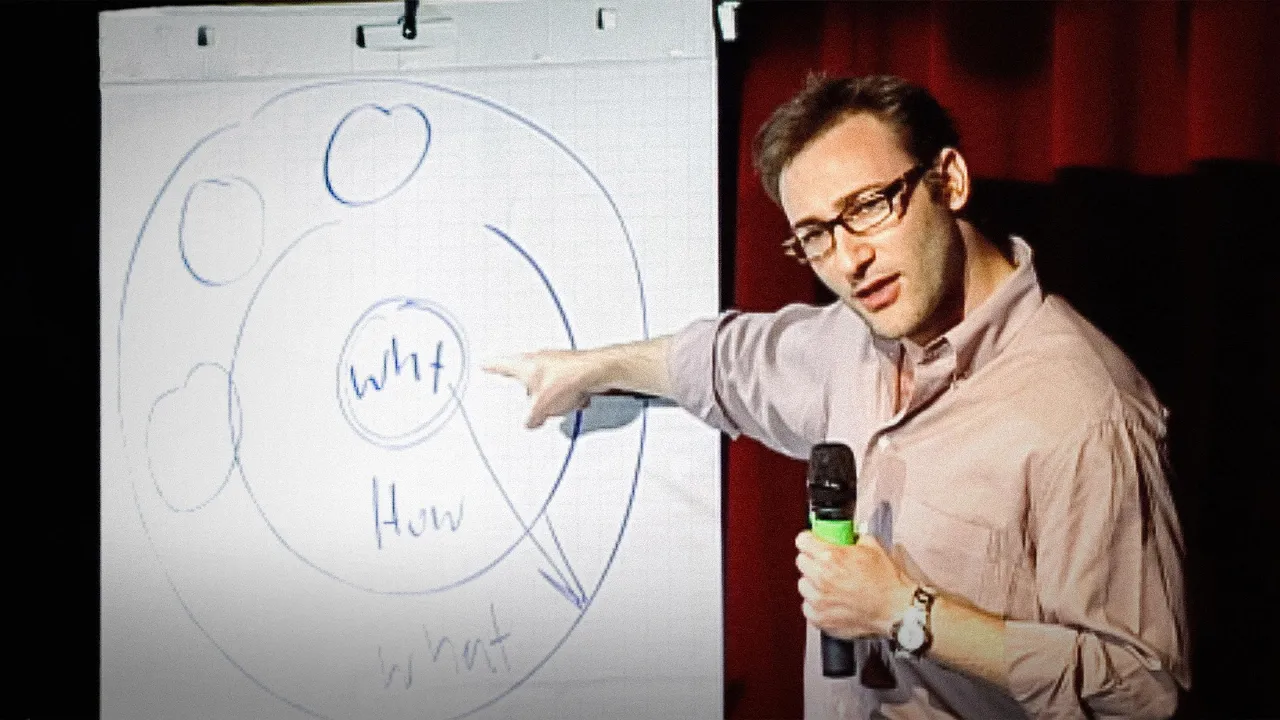
Simon Sinek's Golden Circle framework is a game-changer for SaaS marketing because it shifts the focus from what your product does to why it exists. The whole point we are talking about today in this article, by his words and in an actual step-by-step method. It is definitely something that resonates on a deeper, emotional level with your audience.
The Golden Circle has three layers:
- Why:The core belief and purpose behind your product. This is the emotional hook that makes people care.
- How:The unique process or value that sets your product apart.
- What:The actual features or services you offer.
Most companies communicate in the reverse order, starting with what they do and how they do it, but the most successful brands start with why; because emotions drive decisions. It's an excellent way of storytelling we talked about in this article. Also, when you start to your messaging with 'what do you do', it creates a struggle when structuring your messaging at the 'why' point.
For example, if you market a CRM tool, don't just say:
- What:"We offer an AI-powered CRM."
- How:"It uses predictive analytics to optimize sales."
- Why:(???)
Instead, start with the why:
- Why:"We believe sales teams should spend more time closing deals, not drowning in spreadsheets."
- How:"That's why we built an intuitive CRM that learns from your data and suggests the best next step."
- What:"It is an AI-powered CRM with predictive analytics to help you win more deals."
By flipping the script and leading with why, you connect with customers on an emotional level before introducing the technical details.
If you want to see the master himself explain it, check out this TED Talk:
[](https://youtu.be/qp0HIF3SfI4)
A little shout out note: I am a huge fan of Simon Sinek- his approach to leadership, his optimism, books, talks, everything he offers are truly inspiring and worth following. I actually get my daily dose of inspiration from his 'Notes to Inspire' emails, every day!Definitely recommend signing up!(Of course, #notsponsored - I wish 😂).
Examples: How to Turn Features into Benefits
Okay, now let's cut to the chase here. I listed some examples for different scenarios as much as I can from the examples I've seen, so you can understand it in a better way. Here are how you can rewrite your SaaS messaging to attract the attention of the user with a potential convert to turn them into actual paid customers:
❌"AI-Powered Sentiment Analysis"→ ✅"Know exactly how your customers feel before they churn."
❌"One-Click Data Export"→ ✅"No more 'How do I download this report?' emails from your boss."
❌"Advanced Cybersecurity Protocols"→ ✅"Sleep peacefully knowing your data is hacker-proof."
❌"Automated Social Media Scheduling"→ ✅"Post content consistently without setting 10 reminders."
❌"Multi-User Collaboration Dashboard"→ ✅"No more endless email threads—your team works together in one place."
❌"Our tool offers real-time task tracking, automatic updates, and AI-powered insights."→ ✅"Tired of chasing team members for updates and feeling out of the loop? Our tool ensures no more missed deadlines or endless Slack pings at 11 PM."
Every SaaS tool has great features. The ones that win make their audiencefeel something.
Here is a challenge for you:
Look at your homepage copy right now. If it lists features without explaining why they matter,rewrite it.
You can get help from everyone's work bestie-ChatGPT via sending out the parts that you think is the most useful for you, from this article and ask GPT to turn your feature-telling messaging into a benefit-driven one.
Drop your 'before & after' feature rewrites in the comments & I will give feedback!
Your conversions will be your there to speak for themselves, trust me.